Best Rural Internet Providers to Keep You Connected in 2026
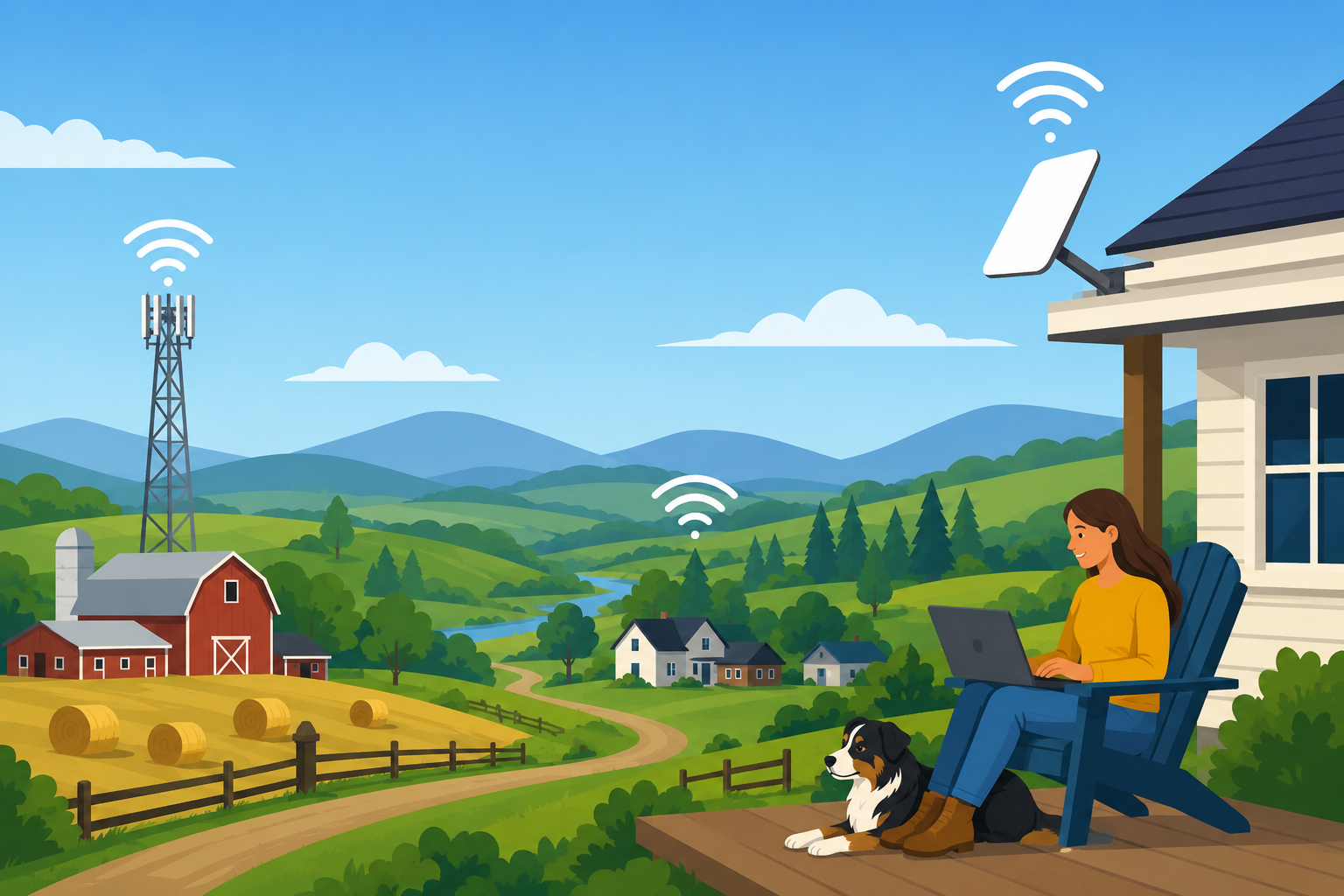
Reliable internet has become essential for everything from remote work and online learning to streaming, gaming, and staying connected with family. Yet finding dependable internet service remains one of the biggest challenges for people living outside major cities. If you’re searching for the best rural internet providers, understanding the strengths and limitations of each connection type can help you make the right decision.
While fiber internet is still limited across many rural communities, several providers offer dependable alternatives. Cable internet delivers the best balance of speed and value where available, DSL remains a practical choice for many households, and satellite internet fills the gap in areas with little or no wired infrastructure.
After comparing pricing, speeds, coverage, and reliability, these are our top recommendations for rural internet in 2026.
Best Rural Internet Providers at a Glance
The three providers below stand out for different reasons, depending on your location and internet needs.
| Provider | Best For | Starting Price | Download Speeds | Connection Type |
|----------|----------|---------------:|----------------:|-----------------|
| Xfinity | Overall Rural Cable Internet | $19.99–$64.99/mo. | 15–250 Mbps | Cable |
| CenturyLink | Rural DSL Internet | $49.00/mo. | 15–100 Mbps | DSL |
| Viasat | Rural Satellite Internet | $30.00–$150.00/mo. | 25–100 Mbps | Satellite |
Generally speaking, cable internet offers the fastest and most consistent performance, followed by DSL. Satellite internet is best reserved for homes where cable and DSL simply aren’t available.
If you’re comparing plans from one of the nation’s largest cable providers, you’ll find additional details about **high-speed residential internet options from Xfinity before deciding which package fits your household.
How We Selected the Best Rural Internet Providers
Choosing an internet provider in a rural area isn’t just about advertised speeds. We considered several factors that matter most to rural customers:
Availability across rural communities
Download and upload performance
Monthly pricing
Data allowances
Network reliability
Overall value for money
Because infrastructure varies significantly by location, the “best” provider often depends on which technologies are available at your address.
Understanding Rural Internet Options
Before comparing providers, it’s important to understand the different connection types available in rural America.
Cable Internet
Cable internet uses coaxial cable networks that can deliver high download speeds with stable performance.
Advantages include:
Faster downloads
Better streaming quality
Lower latency
Excellent for multiple connected devices
The downside is that cable infrastructure doesn’t extend to every rural community.
DSL Internet
DSL internet operates through existing telephone lines, making it available in many locations where cable isn’t.
Although DSL is slower than cable, it typically provides enough bandwidth for:
Web browsing
Email
Video conferencing
HD streaming
Online banking
Everyday household use
Satellite Internet
Satellite internet communicates directly with satellites rather than relying on ground-based cables.
Its biggest advantage is availability. If your home has a clear view of the sky, satellite internet can often be installed almost anywhere.
However, satellite connections usually experience:
Higher latency
Weather-related interruptions
Lower consistency
Higher equipment costs
Xfinity: The Best Rural Cable Internet Provider
Starting Price: $19.99–$64.99/month
Maximum Download Speed: Up to 400 Mbps
Data Cap: 1,200 GB
When cable internet is available in rural areas, Xfinity is one of the strongest options available.
Its network covers large portions of the United States, offering fast download speeds that comfortably support households with multiple users. Streaming 4K content, participating in video meetings, gaming online, and downloading large files can all happen simultaneously without major slowdowns.
Why Xfinity Stands Out
The biggest advantage of Xfinity is speed. Compared with DSL and satellite services, cable technology provides much faster and more reliable performance.
Benefits include:
Competitive introductory pricing
High download speeds
Reliable everyday performance
Large monthly data allowance
Strong coverage across many states
If you’re comparing providers for faster home connectivity, reviewing current internet plans available through Xfinity’s residential services can help determine whether cable service is available in your area.
Potential Drawbacks
Cable isn’t perfect for every rural location.
Performance can decrease as homes are located farther from local network infrastructure. In some remote communities, advertised speeds may not always match real-world performance.
Availability also remains limited compared to DSL, making cable inaccessible for some rural households.
CenturyLink: A Strong Choice for Rural DSL Internet
Starting Price: $49.00/month
Maximum Download Speed: 15–100 Mbps
Data Cap: 1,000 GB
When cable isn’t available, CenturyLink becomes one of the strongest alternatives.
DSL technology relies on existing telephone infrastructure, allowing CenturyLink to serve many rural communities where newer broadband networks haven’t yet been built.
Why CenturyLink Works Well
Although DSL isn’t as fast as cable, it delivers dependable internet for most everyday activities.
CenturyLink is especially attractive because it combines reasonable pricing with broad availability across many rural regions.
Typical uses include:
Streaming movies
Working from home
Online learning
Video conferencing
Social media
General browsing
Those looking for business and residential internet coverage through CenturyLink internet services may also find fiber plans in select cities, though DSL remains the primary option for rural customers.
Things to Consider
DSL speeds vary significantly based on how far your home is from the provider’s equipment.
The farther your location sits from the central office, the slower your connection may become.
Even so, CenturyLink remains one of the most practical rural internet choices available today.
Viasat: The Best Satellite Internet for Remote Areas
Starting Price: $30.00–$150.00/month
Maximum Download Speed: Up to 100 Mbps
Data Cap: 12–300 GB (depending on plan)
When traditional wired internet isn’t available, satellite internet often becomes the only practical solution.
Among satellite providers, Viasat offers one of the strongest selections of plans and some of the highest advertised download speeds.
If you’re evaluating satellite connectivity, understanding how different Viasat satellite internet plans and pricing compare can make choosing the right package much easier.
Advantages of Viasat
Unlike cable or DSL, satellite internet isn’t limited by local infrastructure.
As long as your home has proper satellite visibility, installation is possible in most rural locations.
Benefits include:
Extremely wide coverage
Multiple plan options
Better speeds than older satellite services
Internet access where no wired provider exists
Limitations of Satellite Internet
Satellite technology still comes with trade-offs.
Weather conditions can temporarily reduce performance, and higher latency makes online gaming or real-time communication less responsive.
Equipment costs may also increase your initial installation expense.
Many plans advertise unlimited data, but users who exceed certain usage thresholds may experience reduced speeds during periods of network congestion.
For these reasons, satellite internet is generally considered the best option only when cable and DSL aren’t available.
Other Rural Internet Options Worth Considering
While cable, DSL, and satellite dominate rural broadband, there are a few additional options worth exploring.
Cellular Hotspots
Modern smartphones can function as mobile hotspots, allowing laptops and tablets to connect through cellular networks.
Dedicated mobile hotspot devices are also available.
This option works well for:
Light browsing
Temporary internet access
Travel
Backup internet connections
However, performance depends heavily on nearby cell tower coverage and your carrier’s data limits.
Heavy streaming or downloading can quickly consume monthly data allowances.
Fixed Wireless Internet
Some regional internet providers offer fixed wireless broadband using nearby transmission towers.
When available, fixed wireless often delivers faster performance than satellite while avoiding underground cable installation.
Availability varies widely depending on your region.
Dial-Up Internet
Although uncommon today, dial-up internet still exists in certain remote communities.
Download speeds typically remain below 1 Mbps, making it unsuitable for modern applications such as streaming, video conferencing, or cloud services.
Dial-up should only be considered when no other internet technology is available.
How to Choose the Right Rural Internet Provider
Not every household has the same internet requirements.
Consider the following factors before choosing a provider.
Speed Requirements
Light users who mainly browse websites and check email may only need 25 Mbps.
Families that stream multiple videos, attend virtual meetings, and connect numerous devices simultaneously should consider faster cable options whenever possible.
Availability
Your address ultimately determines your choices.
Even the fastest provider won’t help if service isn’t available in your area.
Monthly Budget
Compare more than the advertised monthly rate.
Also consider:
Equipment rental fees
Installation charges
Data overage costs
Contract requirements
Data Limits
Households that stream extensively should pay close attention to monthly data caps.
Unlimited or high-cap plans provide greater flexibility for large families.
Frequently Asked Questions
What is the best internet provider for rural areas?
Xfinity is generally the best choice when cable service is available because it offers faster speeds, strong reliability, and competitive pricing. If cable isn’t available, CenturyLink DSL is an excellent alternative, while Viasat remains one of the top satellite options.
Is satellite internet good enough for working from home?
Yes, but it depends on your work. Satellite internet can support video meetings and cloud-based work, although higher latency may affect real-time collaboration and VPN performance.
Is DSL faster than satellite?
In many situations, DSL provides more stable performance and lower latency than satellite, even when advertised download speeds appear similar.
Why is rural internet more expensive?
Serving remote communities requires additional infrastructure and maintenance across fewer customers, increasing operating costs for providers.
Will fiber internet become available in more rural areas?
Fiber expansion continues each year, but widespread rural deployment remains limited. Many communities will continue relying on cable, DSL, satellite, or fixed wireless services for the foreseeable future.
Final Thoughts
Finding reliable rural internet requires balancing speed, availability, and affordability.
If cable service reaches your home, Xfinity remains the strongest overall choice thanks to its fast speeds, generous data allowances, and dependable performance.
For homes beyond cable coverage, CenturyLink offers a solid DSL alternative with broad rural availability. When neither cable nor DSL is an option, Viasat provides reliable satellite connectivity that keeps even the most remote households connected.
Before signing up, always check provider availability at your address, compare current promotions, and review data policies carefully. The right provider can make remote work, streaming, online education, and everyday browsing far more reliable—even in rural locations.
Related Posts
 Broadband Deals
cheap internet plans
Broadband Deals
cheap internet plans
Spectrum Internet Cost After 12 Months Explained
Learn how much Spectrum Internet costs after promotional pricing ends. Discover standard rates, billing factors, and ways to reduce monthly costs.
 Broadband Deals
cheap internet deals
cheap internet plans
Broadband Deals
cheap internet deals
cheap internet plans
Portland ISP Providers: How to Find the Best Internet Service
Compare Portland ISP providers, internet speeds, pricing, and availability. Learn how to choose the best internet service for your home or business.
 Internet Bundles
AT&T Business Internet: Plans, Speeds & Benefits Explained
Learn everything about AT&T Business Internet, including plans, speeds, fiber availability, pricing, features, equipment, and how to choose the best option.
 Broadband Deals
Internet Bundles
Broadband Deals
Internet Bundles
Comcast TV and Internet Bundles: Are They Still Worth It
Explore Comcast TV and internet bundles in 2026. Compare benefits, costs, package options, and discover whether a bundled plan fits your needs.
 cheap internet offers
How to Manage Dish Network Internet Data
Learn how to monitor and manage Dish Network Internet data usage with simple tools, smart tips, and optimization strategies to avoid overages.