How to Manage Dish Network Internet Data
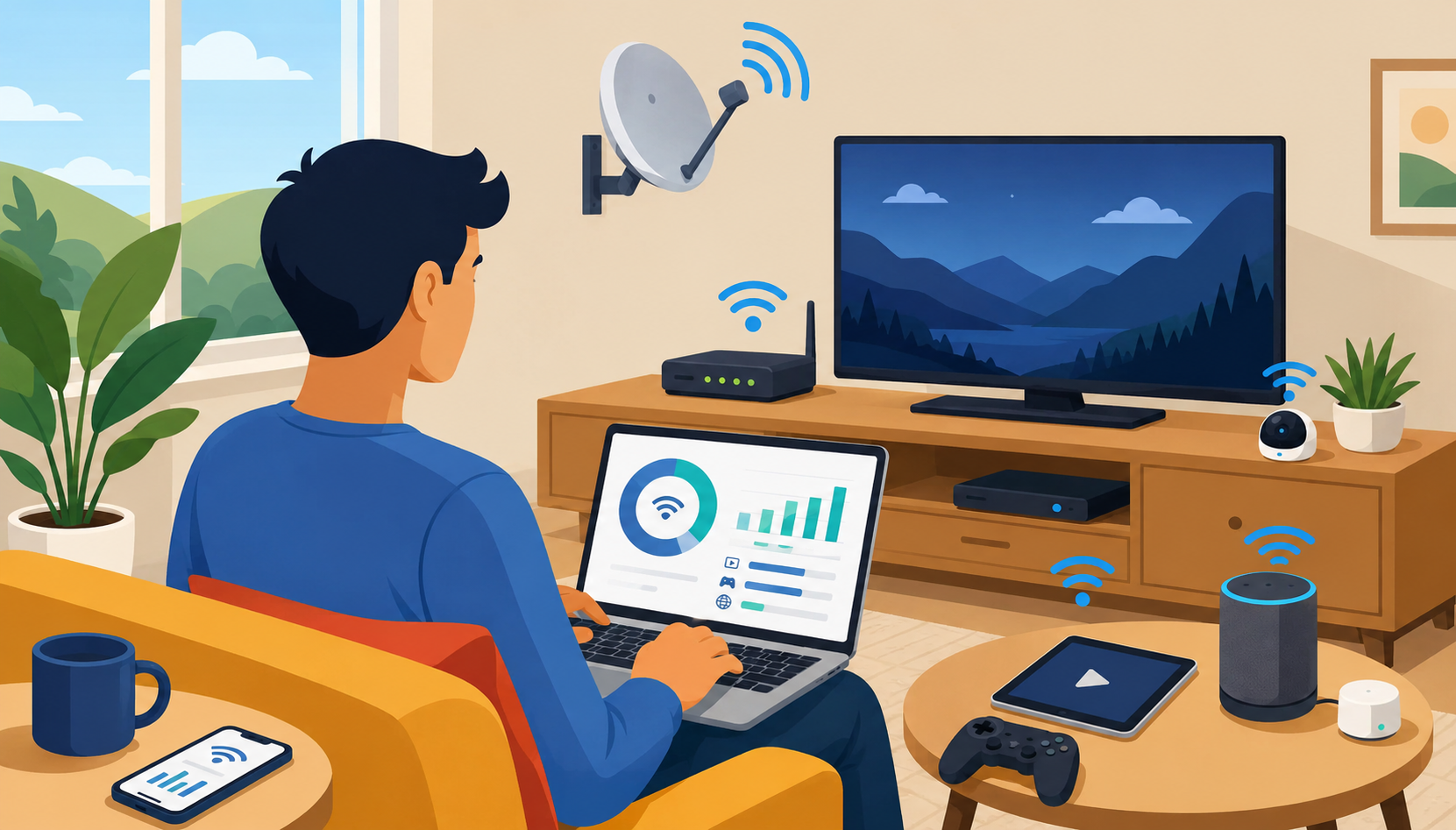
Managing your internet data usage with Dish Network Internet has become essential for households that rely on streaming, online gaming, video calls, and remote work. While Dish Network Internet provides reliable satellite-based connectivity, most plans include data limits that make usage awareness important.
Without proper monitoring, it’s easy to exceed your monthly data allowance, which may result in slower speeds or additional charges depending on your plan. Understanding how your data is consumed—and how to manage it effectively—helps you maintain consistent performance across all your devices.
This guide breaks down how Dish Network Internet data usage works, what tools you can use to monitor it, and practical strategies to stay within your plan limits without sacrificing your online experience.
Understanding Dish Network Internet Plans
Dish Network Internet plans are designed to support a range of usage needs, from light browsing to heavier streaming households. Each plan typically includes a defined data allowance, which is shared across all connected devices in your home.
These plans are especially useful for users in rural or underserved areas where fiber or cable internet may not be available. However, because they rely on satellite infrastructure, data management becomes more important compared to unlimited high-speed alternatives.
Understanding your plan structure helps you answer a critical question: how much data do your daily activities actually consume?
What Is Data Usage and Why It Matters
Data usage refers to the total amount of internet data your devices consume when performing online activities. Every action—from streaming videos to sending emails—uses a portion of your monthly data allocation.
High-impact activities include:
Streaming HD or 4K video content
Online gaming and updates
Video conferencing (Zoom, Teams, etc.)
Downloading large files or apps
Lower-impact activities include:
Browsing websites
Sending emails
Messaging apps
Even though individual actions may seem small, combined household usage can add up quickly. This is especially true for homes with multiple users and smart devices connected simultaneously.
Monitoring your data usage ensures that you can balance performance with cost efficiency while avoiding unexpected slowdowns.
Tools for Monitoring Your Data Usage
Dish Network provides built-in tools that make it easier to track internet usage in real time. These tools are typically accessible through your online account dashboard or mobile app.
Through these platforms, users can:
View daily, weekly, and monthly data consumption
Identify peak usage times
Monitor device-level activity (in some configurations)
Set usage notifications and alerts
For users who want deeper visibility, third-party network monitoring tools can also be used. These tools can track individual device consumption and provide insights into which apps or services are using the most bandwidth.
Smart home integrations may also enhance visibility by syncing usage data across connected devices, giving you a more complete view of household internet activity.
How to Access Your Usage Data
Checking your data usage on Dish Network Internet is straightforward and only takes a few steps:
Log in to your Dish Network account portal
Navigate to the internet or data usage section
Review your current usage summary
Adjust alert preferences if needed
The dashboard typically provides a visual breakdown of usage patterns, helping you understand how your internet is being consumed throughout the billing cycle.
Regular monitoring is recommended, especially during heavy usage months or when multiple users are active in the household.
Practical Tips to Manage Data Usage Effectively
Managing your data efficiently doesn’t require major lifestyle changes. Small adjustments can significantly reduce consumption while maintaining a smooth online experience.
Set Data Alerts
One of the most effective ways to stay in control is by enabling data alerts. These notifications warn you when you are approaching your monthly limit, giving you time to adjust usage before overages occur.
Alerts are especially useful in shared households where multiple users may not be aware of total consumption.
Reduce Streaming Quality
Streaming is one of the largest contributors to data usage. Adjusting video quality can make a noticeable difference:
SD streaming: lowest data usage
HD streaming: moderate usage
4K streaming: highest usage
Switching from 4K to HD can reduce data consumption significantly without heavily impacting viewing experience on smaller screens.
Download Content for Offline Use
If you frequently watch series or movies, downloading content ahead of time is a smart strategy. This allows you to use Wi-Fi efficiently during off-peak hours and avoid repeated streaming of the same content.
Downloaded content does not repeatedly consume data, making it ideal for travel or offline viewing.
Manage Multiple Devices
Households with several devices connected at once often experience higher data usage without realizing it. Smart TVs, phones, tablets, laptops, and IoT devices all contribute to total consumption.
To manage this effectively:
Disconnect unused devices
Turn off automatic updates on non-essential devices
Limit background app activity
Schedule High-Bandwidth Activities
Whenever possible, schedule large downloads or updates during off-peak hours or when network demand is lower in your household.
This helps reduce network congestion and improves overall performance.
Optimizing Satellite Internet Performance
Satellite internet performance depends not only on data usage but also on signal quality and network optimization.
Simple adjustments like repositioning your satellite dish, reducing physical obstructions, or upgrading your router can significantly improve stability and speed.
When your connection performs more efficiently, you naturally use data more effectively as well.
Dish Network vs Other Internet Providers
When comparing Dish Network Internet with other services, one key difference lies in how data usage is monitored and managed.
For example, comparing it with AT&T’s TV and internet ecosystem highlights different approaches to user experience and data control.
You can explore the comparison here:
Dish Network vs AT&T TV internet performance comparison
Dish Network tends to focus on simplified tracking tools and satellite coverage advantages, while other providers may offer unlimited data options or fiber-based speed consistency.
Your choice depends on location, usage intensity, and budget priorities.
Smart Devices and Data Monitoring
Modern smart homes rely heavily on connected devices such as smart speakers, security cameras, thermostats, and streaming devices.
These devices continuously use background data, even when not actively in use.
To maintain control:
Regularly review connected devices list
Disable unused smart features
Monitor camera upload settings (especially for cloud storage)
Set usage limits where supported
Smart integrations can also help by providing real-time insights into total household consumption.
Avoiding Overages and Penalties
Exceeding your data limit may result in reduced speeds or additional charges, depending on your Dish Network Internet plan.
To avoid this:
Monitor usage weekly instead of monthly
Set early-warning alerts
Prioritize essential activities during high-usage periods
Adjust streaming and download habits
Staying proactive helps ensure a stable internet experience throughout the billing cycle.
The Future of Data Usage Management
Data tracking technology continues to evolve with advancements in AI and smart network systems. Future Dish Network Internet tools are expected to offer:
Predictive usage alerts
Automated bandwidth optimization
Smarter device-level tracking
Real-time usage recommendations
As connected homes become more complex, these tools will play a critical role in maintaining efficient and cost-effective internet usage.
Frequently Asked Questions (FAQ)
1. How do I check my Dish Network Internet data usage?
You can log into your Dish Network account dashboard and navigate to the data usage section to view real-time consumption details.
2. Does Dish Network Internet have data caps?
Yes, most plans include data limits that vary depending on the package. Exceeding these limits may reduce speeds.
3. What uses the most data on Dish Network Internet?
Streaming HD/4K video, online gaming, video calls, and large downloads typically consume the most data.
4. Can I increase my data allowance?
Some plans may allow upgrades or add-ons depending on availability in your area.
5. How can I reduce my internet data usage quickly?
Lowering streaming quality, limiting background apps, and disconnecting unused devices are the fastest ways to reduce usage.
Conclusion
Managing your Dish Network Internet data usage is not complicated when you understand how your online activities translate into consumption. With the right monitoring tools, smart habits, and simple optimizations, you can maintain strong performance without exceeding your plan limits.
A proactive approach ensures smoother connectivity, fewer interruptions, and better control over your monthly internet experience.
Related Posts
 cheap internet offers
Broadband Deals
cheap internet offers
Broadband Deals
How to Decode Your Internet Bill and Spot Hidden Fees
Learn how to read your internet bill, identify hidden fees, challenge unnecessary charges, and lower your monthly internet costs with confidence.
 Broadband Deals
cheap internet deals
Regulations
Broadband Deals
cheap internet deals
Regulations
Early Termination Fees: What You Need to Know First
Learn the true cost of early termination fees, how internet contracts work, ways to avoid penalties, and what to check before signing up.
 Internet Bundles
Best Internet Service Deals and Promotions This Year
Compare the best internet service deals, promotions, gift cards, streaming offers, and bundle discounts from top internet providers to maximize your savings.
 cheap internet offers
The Internet Moving Checklist to Avoid Service Downtime
Use this complete internet moving checklist to avoid downtime, transfer service smoothly, schedule installation early, and stay connected.
 Safety
Best VPNs for Comcast Xfinity: Fast, Private & Reliable
Discover the best VPNs for Comcast Xfinity to improve speed, privacy, and streaming access. Compare top options for secure and reliable internet use.